
Published on April 30, 2025
The Cost of Complacency: Tail Risk and Black Swans
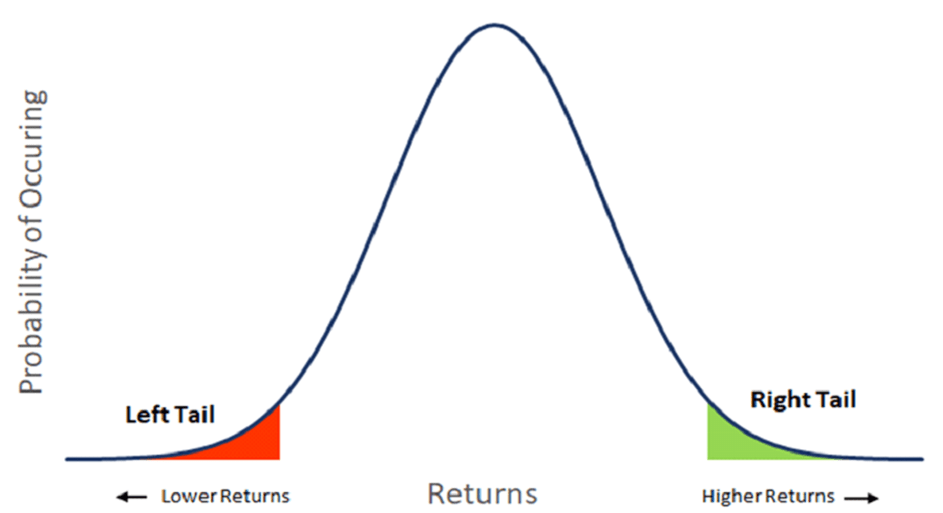
In the last twenty years, investors have lived through two black swan events that triggered market crashes: the 2008 financial crisis and the COVID-19 pandemic. These kinds of events are considered tail end events that are beyond the normal distribution of the bell curve. Black swans are unlikely to occur at any given moment but can strike at any time. During the good times, investors can be lulled to sleep and get caught flat-footed when tail risk events strike, leaving their portfolios devastated. During these events, correlations between traditional assets can spike as investors rush for the exits, and traditional forms of diversification can fall short. As a complement to traditional diversification, uncorrelated alternative investments are key tools for mitigating tail risk, and institutional investors have increasingly been allocating to alternatives. To mitigate tail risk, investors should consider complementing their 60/40 portfolios with uncorrelated alternative investments to better prepare for the potential of the next black swan event.
A Tail About Risk
Tail risk refers to unlikely and extreme events occurring which are often referred to as black swans. These events are beyond the normal distribution of outcomes on the bell curve and typically involve circumstances that are incredibly difficult if not impossible to predict. As past performance is not indicative of future results, tail risk events often involve incidents that have not happened in the past and cannot be accurately predicted by historical analysis. For example, in the last 20 years, investors have witnessed two such events in the 2008 financial crisis and the COVID-19 pandemic. Both events involved circumstances that had never happened historically and shocked the world and financial markets alike. Trying to predict black swan events like these is a largely futile exercise. Investors are better suited looking at the probabilities and understanding that the only sure thing about black swan events is that another black swan event will inevitably strike and can wreak havoc on portfolios at a moment’s notice.
The 60/40 Needs More Diversification
The most common method of reducing risk is by diversifying investments across asset classes and asset types. One of the most popular versions of portfolio diversification is the 60/40 stocks to bond portfolio. While the 60/40 portfolio provides strong diversification most of the time, tail risk events can expose gaps as investors rush for the exits and sell assets for cash. During 2020, stocks and bonds fell simultaneously as the world and financial markets cratered amidst the uncertainty.
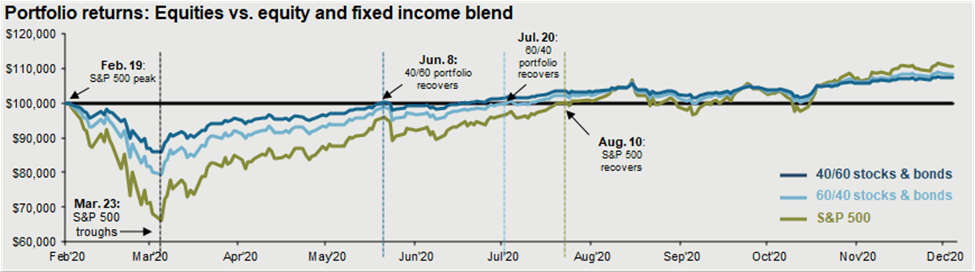
Stocks and bonds proceeded to rally simultaneously following the crash, but the downturn served as a wakeup call to investors who did not realize the amount of risk that their portfolios were exposed to. Many investors learned from the COVID-19 downturn and added a third leg to their portfolios to further diversify their investments. Others were in for another rough time as stocks and bonds fell simultaneously again for a more prolongated period in 2022.
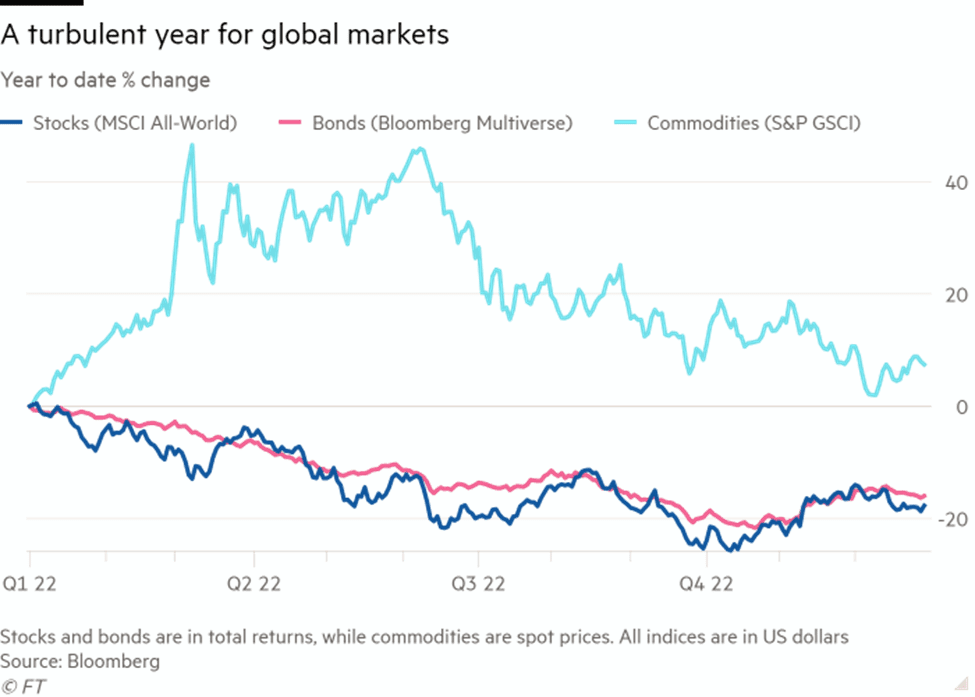
The 60/40 portfolio diversifies away a considerable amount of risk, but substantial gaps remain. During tail risk black swan events, the 60/40 portfolio can crater if correlations between stocks and bonds spike as investors rush for the exits. To further diversify portfolios, investors should consider allocating more capital to alternative investments as institutions are doing.
The Institutional Alternative
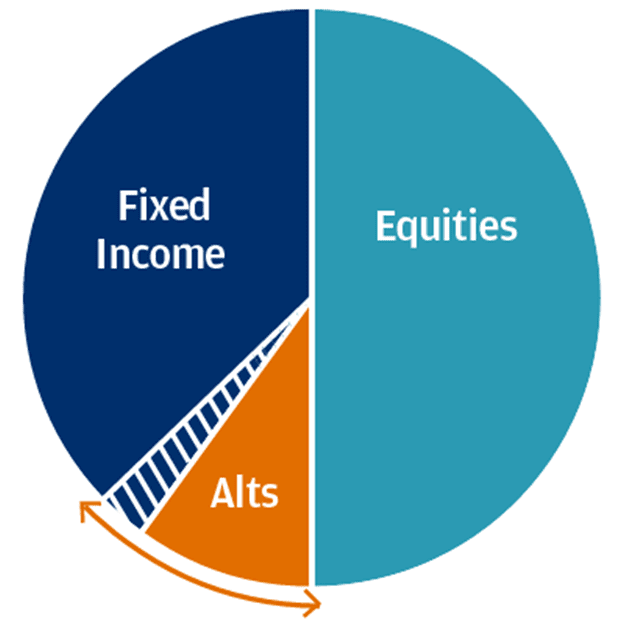
Following the financial crisis in 2008, many institutional investors began allocating more capital to alternative investments. The period of extreme market turmoil left an impression on allocators that they needed more diversity than traditional stocks and bonds provided. State and local pension funds have increased their allocations to alternative investment funds from 9% to over 33% since 2008, and many pensions have greatly benefited from the transition.4 State pensions that have focused on private equity have achieved annualized returns greater than 10% over the last fifteen years, greatly outperforming both equities and fixed income. Many institutional investors have learned from the painful lessons of black swan events and have increased their allocations to alternative investments to further diversify their portfolios. In some cases, those allocations have both blunted the impact of portfolio drawdowns and driven alpha over the long run.
Source: J.P. Morgan Private Bank.
What Investors Can Learn From Institutions
Over the last twenty years, investors have witnessed two black swan events. Black swan events are notoriously hard to predict as they often involve novel incidents that do not have historical comparisons. However, investors should consider black swan events as tail risk events that are unlikely at any given moment but inevitable over the long-run and prepare accordingly. The traditional diversification of the 60/40 portfolio can fall short during periods of extreme market duress as investors rush for the exits. To account for this, institutional investors have been increasingly allocating to alternative investments since 2008 to better position themselves for the inevitability of future market shocks. To further diversify 60/40 portfolios, investors should follow the lead of institutions and consider increasing their exposure to alternative investments.
Sources:
- Forbes, May 2024. “How Smaller Institutions Are Adopting Alternative Investments.”
- Passage Global Capital Management, April 2020. “What is Tail Risk?”
- Passage Global Capital Management, April 2020. “What is Tail Risk?”
- Darrow Wealth Management.
- Financial Times. January 2023. “Stock and bond markets shed more than $30tn in ‘brutal’ 2022”
- Forbes, May 2024. “How Smaller Institutions Are Adopting Alternative Investments.”
- J.P. Morgan Private Bank.
There are many different types of alternative investments that can mitigate and manage tail risk but as with any alternative investment, these require careful consideration and due diligence.
For financial advisors only.